• For many people, the idea of counselling still comes with hesitation. There’s often a belief that talking won’t change anything, that problems should be handled alone, or that others have it worse. Yet again and again, people discover that being able to talk, openly, safely, and without judgement, can be profoundly powerful.

    So why does talking actually help?

    We Are Not Meant to Carry Everything Alone

    Humans are social beings. From early life, we make sense of the world through interaction, being heard, soothed, and understood by others. When distress is pushed down or ignored, it doesn’t disappear. Instead, it often shows up in other ways: anxiety, low mood, irritability, physical tension, sleep problems, or a sense of emotional numbness.

    Talking allows what’s been held inside to surface. Naming feelings, thoughts, and experiences can reduce their intensity and make them feel more manageable. What once felt overwhelming begins to feel organised.

    Talking Creates Meaning…

    Many people come to counselling not because of one single event, but because things feel confusing or stuck. They might say, “I don’t know why I feel like this” or “I should be fine, but I’m not.” Through conversation, patterns start to emerge. Connections are made between past experiences, current stressors, and emotional responses.

    This process helps people understand why they feel the way they do, and understanding brings relief. When something makes sense, it often loses some of its power.

    Why Talking Helps More Than We Realise

    One of the most healing aspects of counselling is being listened to with genuine attention and empathy. Many people are used to minimising their feelings or being told to “get on with it.” In contrast, counselling offers a space where your experiences are taken seriously. When someone listens without judgement, it can change how you view yourself. Self-criticism softens. Shame reduces. People begin to treat themselves with more compassion, often for the first time.
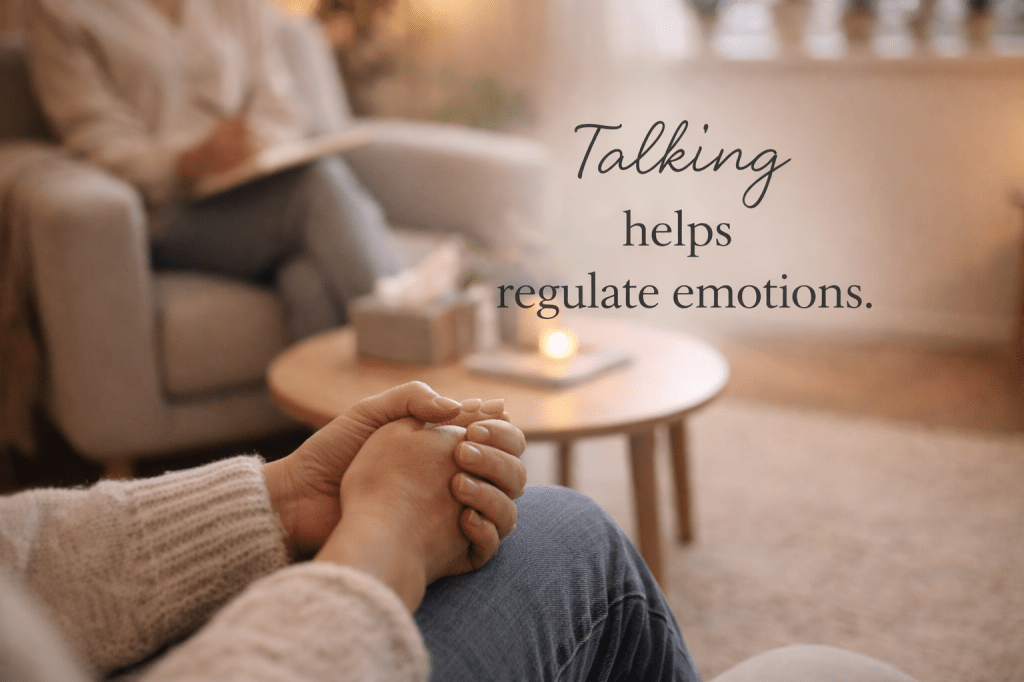
    Strong emotions can feel frightening or out of control when they’re experienced alone. Talking through feelings in a safe space helps regulate them. This doesn’t mean getting rid of emotions, but learning how to sit with them, understand them, and respond rather than react.Over time, many people notice they feel calmer, more grounded, and better able to cope with life’s challenges.

    A common misconception is that counselling requires you to know exactly what you want to talk about. In reality, it’s okay not to know where to start. The process unfolds naturally, at your pace. Counselling isn’t about being fixed or told what to do. It’s about exploring, reflecting, and growing, with support.

    A Space Just for You

    At The Wing Project, counselling is offered as a collaborative, compassionate process. A space where you can pause, reflect, and be yourself without pressure or expectation.Talking won’t erase life’s difficulties, but it can help you face them with greater clarity, confidence, and self-understanding. Sometimes, the most powerful step forward begins with simply being heard.

  • Starting therapy can feel like stepping into the unknown. Many people arrive feeling nervous, unsure, or worried about what they’re “supposed” to say. Others feel relief, because they’ve finally taken a brave step toward getting support. All of these feelings are completely normal.

    A first therapy session is not a test, an interrogation, or a place where you need to have everything figured out. Instead, it is a gentle starting point, a conversation designed to help you feel safe, understood, and supported.

    Here’s what you can typically expect.


    1. A Warm Welcome and a Chance to Settle In

    The session usually begins with a simple check-in. We might talk about how your day has been, what brought you here, or what you hope therapy might offer.

    There is no pressure to explain everything at once.
    Many people begin with:

    • “I don’t know where to start,”
    • “I just know something isn’t right,” or
    • “I’ve never done this before.”

    And that is perfectly okay.

    Therapy unfolds at your pace.


    2. Exploring What Brought You to Therapy

    During the first session, we lightly explore what has been going on for you. This may include talking about:

    • Recent challenges,
    • Ongoing struggles or symptoms,
    • Important life events,
    • Or simply a feeling you can’t quite put into words.

    You never have to share more than you feel comfortable with.
    Think of it as opening a window, not the whole door.


    3. Understanding What You Need

    Every client’s needs are different. Some want a space to talk freely. Others want tools and structure. Some want both.

    In the first session, we begin to explore:

    • What would make therapy helpful for you?
    • How would you know it’s working?
    • What do you hope might feel different in your life?

    These questions help shape the direction of our work together.


    4. Introducing How Therapy Works

    I’ll talk through things like:

    • Confidentiality and its limits,
    • Session length,
    • How often we meet,
    • What my therapeutic approach looks like.

    This isn’t just housekeeping, it helps build a foundation of trust and clarity. Therapy works best when we both understand the process and feel comfortable within it.


    5. Beginning to Build a Relationship

    Talking therapy isn’t only about techniques; it’s about connection.
    The first session helps us sense whether we’re a good fit for each other.

    You might pay attention to:

    • Do I feel safe here?
    • Do I feel listened to?
    • Do I feel like I can be honest?

    These feelings matter.
    A strong therapeutic relationship often becomes the heart of healing.


    6. What You Don’t Need to Worry About

    Many people think they must:
    ✘ Have a perfect explanation
    ✘ Be emotionally controlled
    ✘ Say everything “right”
    ✘ Know exactly what they want

    None of this is true.
    The first session is an invitation, not an expectation. Your story can unfold gently, in layers, over time.


    7. Leaving the Session

    Most people leave their first session feeling:

    • Lighter,
    • Clearer,
    • Surprised at how comfortable it felt,
    • Or simply relieved that they started.

    Sometimes emotions come up afterwards, that’s normal too. Therapy touches places we often keep tucked away.


    A Final Reflection

    Beginning therapy is an act of courage. It says, “I deserve support. I deserve space. I deserve to understand and heal.”
    You don’t need to arrive perfectly formed or knowing exactly what to say. You just need to arrive as you are.

    If you’re thinking about taking that first step, I’m here, ready to walk with you at your pace.

  • Why Do We Worry? A Therapist’s Perspective

    We often think of worry as a flaw, something we should stop doing, push aside, or “get over.” But from a therapeutic perspective, worry is rarely pointless. It is usually a signal.

    Worry appears when the mind is trying to protect us from the unknown. It gathers possibilities, imagines outcomes, and attempts to prepare us for danger, even when that danger never arrives. In many ways, worry is the mind’s attempt to care for us, just in a way that often becomes overwhelming.

    The problem is not that we worry.
    The problem is that our worry can become louder than what is actually happening in the present moment. When worry takes over, we lose connection with reason, calm, and our own inner resources.

    In therapy, I often explore these questions with clients:

    • What is your worry trying to protect you from?
    • Where did you first learn to worry this way?
    • Is the voice of your worry truly yours or was it shaped by past experiences?

    Many people discover that their worry stems not from weakness, but from old patterns of survival, childhood expectations, fear of being misunderstood, or experiences of instability.

    The aim is not to silence worry completely.
    The aim is to translate it, to understand its message, sooth its intensity, and gain enough distance to think and choose clearly.

    When we give space to our inner world, we begin to realise that worry is not an enemy. It is a part of us longing for reassurance, safety, and understanding. And with the right support, those needs can be met in healthier, gentler ways.

    If worry plays a loud role in your life and you’d like to explore it in a compassionate, secure space, I am here to help.